
Reserved IP Addresses
Of course, the registry agencies (ARIN, IANA, ICANN, etc) keep track of these lists, but incredibly, I have yet to find a "reserved" list on any of their websites !! There is, however, a list called the "Bogon List" that tracks those addresses that should not be allowed to access your network.
Class E - first four bits = 1111 - 240.0.0.0 through 255.255.255.254 - Reserved
Three Special IP Addresses
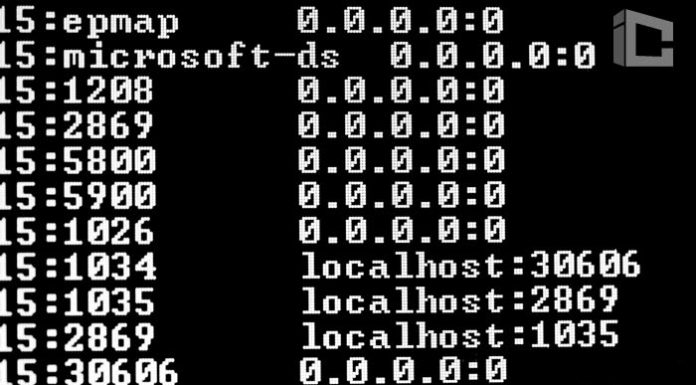
This Computer, or All networks - 0.0.0.0 should not be used as an address for any station. 0.0.0.0 is only an invalid _remote_ address - i.e. you can't 'connect' to 0.0.0.0, or send anything there. However, programs like WFTPD, that act as servers, can 'listen' at 0.0.0.0 for incoming connections - what this will do is to allow WFTPD (or whatever) to accept incoming connections on any and all interfaces that you have TCP/IP installed on. So 0.0.0.0 is a valid local address for many operations, but is not a valid remote address.
Loopback or Local Host - 127.0.0.0 (or 172/8) should not be used as an address for any station - it is used to ping yourself.
Broadcast to All - 255.255.255.255 should not be used as an address for any station.
Partial List of common Available and Reserved IP Addreses
Private IP Addresses
|
Class |
From |
To |
CIDR Mask |
Decimal Mask |
|
Class “A” or 24 Bit |
10.0.0.0 |
10.255.255.255 |
/8 |
255.0.0.0 |
|
Class “B” or 20 Bit |
172.16.0.0 |
172.31.255.255 |
/12 ( or /16 ) |
255.240.0.0 or 255.255.0.0 |
|
Class “C” or 16 Bit |
192.168.0.0 |
192.168.255.255 |
/16 ( or /24 ) |
255.255.0.0 or 255.255.255.0 |
Full List of Reserved IP Addresses
www.iana.org (Internet Assigned Numbers Authority)
www.icann.org (Internet Corporation for Assigned Names and Numbers)
http://www.aso.icann.org/ (Address Supporting Organization)
1. Introduction
Minor portions of the IPv4 address space have been allocated or assigned directly by the IANA for global or other specialized purposes. These allocations and assignments have been documented in a variety of RFCs and other documents. This document is intended to collect these scattered references.
On an ongoing basis, the IANA has been designated by the IETF to make assignments in support of the Internet Standards Process [ RFC2860]. Section 3 of this document describes that assignment process.
2. Global and Other Specialized Address Blocks
10.0.0.0/8 - This block is set aside for use in private networks. Its intended use is documented in [RFC1918]. Addresses within this block should not appear on the public Internet.
14.0.0.0/8 - This block is set aside for assignments to the international system of Public Data Networks [ RFC1700, page 181]. The registry of assignments within this block can be accessed from the "Public Data Network Numbers" link on the web page at http://www.iana.org/numbers.html. Addresses within this block are assigned to users and should be treated as such.
24.0.0.0/8 - This block was allocated in early 1996 for use in provisioning IP service over cable television systems. Although the IANA initially was involved in making assignments to cable operators, this responsibility was transferred to American Registry for Internet Numbers (ARIN) in May 2001. Addresses within this block are assigned in the normal manner and should be treated as such.
39.0.0.0/8 - This block was used in the "Class A Subnet Experiment" that commenced in May 1995, as documented in [ RFC1797]. The experiment has been completed and this block has been returned to the pool of addresses reserved for future allocation or assignment. This block therefore no longer has a special use and is subject to allocation to a Regional Internet Registry for assignment in the normal manner.
127.0.0.0/8 - This block is assigned for use as the Internet host loopback address. A datagram sent by a higher level protocol to an address anywhere within this block should loop back inside the host. This is ordinarily implemented using only 127.0.0.1/32 for loopback, but no addresses within this block should ever appear on any network anywhere [ RFC1700, page 5].
128.0.0.0/16 - This block, corresponding to the numerically lowest of the former Class B addresses, was initially and is still reserved by the IANA. Given the present classless nature of the IP address space, the basis for the reservation no longer applies and addresses in this block are subject to future allocation to a Regional Internet Registry for assignment in the normal manner. 169.254.0.0/16 - This is the "link local" block. It is allocated for communication between hosts on a single link. Hosts obtain these addresses by auto-configuration, such as when a DHCP server may not be found.
172.16.0.0/12 - This block is set aside for use in private networks. Its intended use is documented in [ RFC1918]. Addresses within this block should not appear on the public Internet.
191.255.0.0/16 - This block, corresponding to the numerically highest to the former Class B addresses, was initially and is still reserved by the IANA. Given the present classless nature of the IP address space, the basis for the reservation no longer applies and addresses in this block are subject to future allocation to a Regional Internet Registry for assignment in the normal manner.
192.0.0.0/24 - This block, corresponding to the numerically lowest of the former Class C addresses, was initially and is still reserved by the IANA. Given the present classless nature of the IP address space, the basis for the reservation no longer applies and addresses in this block are subject to future allocation to a Regional Internet Registry for assignment in the normal manner.
192.0.2.0/24 - This block is assigned as "TEST-NET" for use in documentation and example code. It is often used in conjunction with domain names example.com or example.net in vendor and protocol documentation. Addresses within this block should not appear on the public Internet.
192.88.99.0/24 - This block is allocated for use as 6to4 relay anycast addresses, according to [ RFC3068].
192.168.0.0/16 - This block is set aside for use in private networks. Its intended use is documented in [RFC1918]. Addresses within this block should not appear on the public Internet.
198.18.0.0/15 - This block has been allocated for use in benchmark tests of network interconnect devices. Its use is documented in [ RFC2544].
223.255.255.0/24 - This block, corresponding to the numerically highest of the former Class C addresses, was initially and is still reserved by the IANA. Given the present classless nature of the IP address space, the basis for the reservation no longer applies and addresses in this block are subject to future allocation to a Regional Internet Registry for assignment in the normal manner. 224.0.0.0/4 - This block, formerly known as the Class D address space, is allocated for use in IPv4 multicast address assignments. The IANA guidelines for assignments from this space are described in [ RFC3171].
240.0.0.0/4 - This block, formerly known as the Class E address space, is reserved. The "limited broadcast" destination address 255.255.255.255 should never be forwarded outside the (sub-)net of the source. The remainder of this space is reserved for future use. [ RFC1700, page 4]
3. Summary Table
Address Block Present Use Reference
---------------------------------------------------------------------
0.0.0.0/8 "This" Network [RFC1700, page 4]
10.0.0.0/8 Private-Use Networks [RFC1918]
14.0.0.0/8 Public-Data Networks [RFC1700, page 181]
24.0.0.0/8 Cable Television Networks --
39.0.0.0/8 Reserved but subject
to allocation [RFC1797]
127.0.0.0/8 Loopback [RFC1700, page 5]
128.0.0.0/16 Reserved but subject
to allocation --
169.254.0.0/16 Link Local --
172.16.0.0/12 Private-Use Networks [RFC1918]
191.255.0.0/16 Reserved but subject
to allocation --
192.0.0.0/24 Reserved but subject
to allocation --
192.0.2.0/24 Test-Net
192.88.99.0/24 6to4 Relay Anycast [RFC3068]
192.168.0.0/16 Private-Use Networks [RFC1918]
198.18.0.0/15 Network Interconnect
Device Benchmark Testing [RFC2544]
223.255.255.0/24 Reserved but subject
to allocation --
224.0.0.0/4 Multicast [RFC3171]
240.0.0.0/4 Reserved for Future Use [RFC1700, page 4]
4. Assignments of IPv4 Blocks for New Specialized Uses
The domain name and IP address spaces involve policy issues (in addition to technical issues) so that the requirements of [ RFC2860] do not apply generally to those spaces. Nonetheless, the IANA is responsible for ensuring assignments of IPv4 addresses as needed in support of the Internet Standards Process. When a portion of the IPv4 address space is specifically required by an RFC, the technical requirements (e.g., size, prefix length) for the portion should be described [ RFC2434]. Immediately before the RFC is published, the IANA will, in consultation with the Regional Internet Registries, make the necessary assignment and notify the RFC Editor of the particulars for inclusion in the RFC as published.
As required by [ RFC2860], the IANA will also make necessary experimental assignments of IPv4 addresses, also in consultation with the Regional Internet Registries.
5. Security Considerations
6. IANA Considerations
7. References
[RFC1174] Cerf, V., "IAB Recommended Policy on Distributing Internet
Identifier Assignment and IAB Recommended Policy Change to
Internet 'Connected' Status", RFC 1174, August 1990.
[RFC1700] Reynolds, J. and J. Postel, "Assigned Numbers", STD 2, RFC
1700, October 1994.
[RFC1797] IANA, "Class A Subnet Experiment", RFC 1797, April 1995.
[RFC1918] Rekhter, Y., Moskowitz, B., Karrenberg, D., de Groot, G.
J., and E. Lear, "Address Allocation for Private
Internets", BCP 5, RFC 1918, February 1996.
[RFC2050] Hubbard, K., Kosters, M., Conrad, D., Karrenberg, D., and
J. Postel, "Internet Registry IP Allocation Guidelines",
BCP 12, RFC 2050, November 1996.
[RFC2434] Narten, T., and H. Alvestrand, "Guidelines for Writing an
IANA Considerations Section in RFCs", BCP 26, RFC 2434,
October 1998.
[RFC2544] Bradner, S., and J. McQuaid, "Benchmarking Methodology for
Network Interconnect Devices", RFC 2544, March 1999.
[RFC2860] Carpenter, B., Baker, F., and M. Roberts, "Memorandum of
Understanding Concerning the Technical Work of the Internet
Assigned Numbers Authority", RFC 2860, June 2000.
[RFC3068] Huitema, C., "An Anycast Prefix for 6to4 Relay Routers",
RFC 3068, June 2001.
[RFC3171] Albanna, Z., Almeroth, K., Meyer, D., and M. Schipper,
"IANA Guidelines for IPv4 Multicast Address Assignments",
BCP 51, RFC 3171, August 2001.
[RFC3232] Reynolds, J. Ed., "Assigned Numbers: RFC 1700 is Replaced
by an On-line Database", RFC 3232, January 2002.